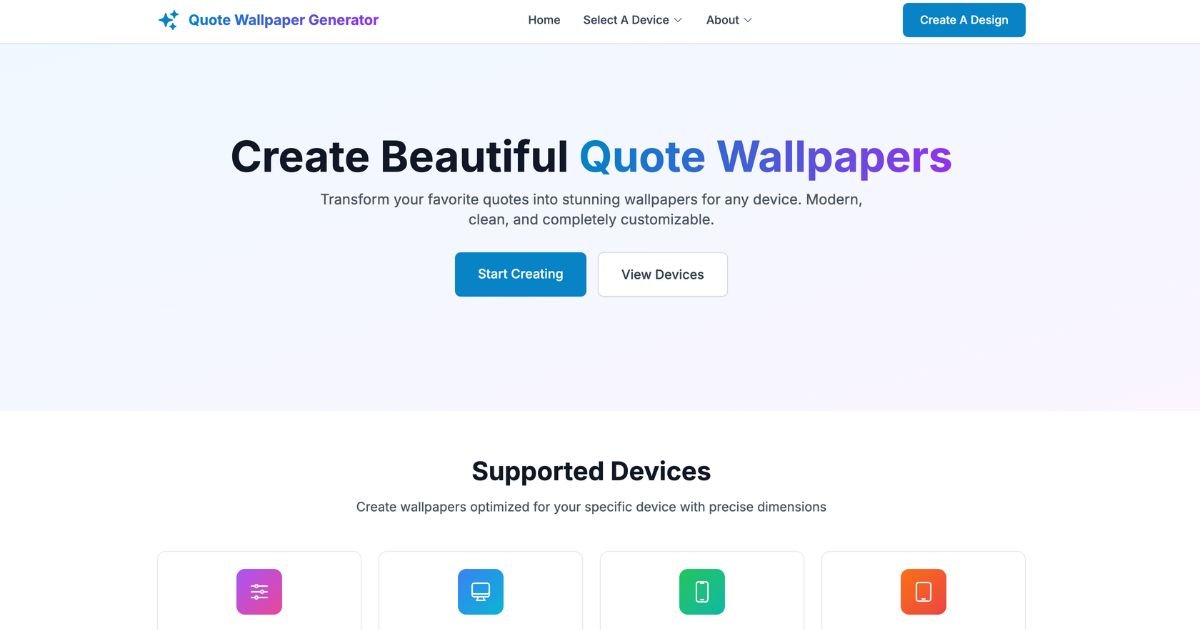
The digital backdrop of our lives, whether it's on a phone, tablet, or desktop, speaks volumes about our personality, mood, and aesthetic. But let's be honest, scrolling through endless generic stock photos trying to find that one perfect image can be soul-crushing. This is where the magic of AI comes in, fundamentally changing how we personalize our devices. If you're pondering Choosing Your Ideal Wallpaper Generator to unlock a world of bespoke digital backgrounds, you've come to the right place. We're about to dive deep into the tools that transform your wildest ideas into stunning visual art, tailored precisely for you.
At a Glance: What You'll Learn About Wallpaper Generators
- Why AI is a Game-Changer: Understand how artificial intelligence is revolutionizing digital personalization.
- Key Features to Look For: Discover essential capabilities like style diversity, resolution, and ease of use.
- Deep Dive into Top Tools: Get the lowdown on generators like Pixelcut and CGDream, including their unique strengths.
- Beyond Wallpapers: Explore how some tools offer advanced features, like generating 3D models.
- Mastering the Prompt: Learn the art of crafting effective text descriptions for optimal results.
- Making the Right Choice: A framework to help you select the best generator for your specific needs.
- Navigating Commercial Use: Important considerations if you plan to use AI art professionally.
Why AI Wallpaper Generators Are Changing the Game
Forget endlessly searching curated collections or settling for generic designs. AI wallpaper generators empower you to become the artist, transforming abstract concepts, vivid imagery, or even just a mood into a unique, high-resolution digital masterpiece. It's about taking your specific vision – a "synthwave cityscape at dusk, neon glow, intricate details, moody purple and pinks" – and seeing it rendered almost instantly.
This isn't just about convenience; it's about unparalleled personalization. You can match your wallpaper to your current outfit, your favorite song, a game you're playing, or even the weather outside. The barrier between your imagination and a stunning visual reality has never been lower.
Unpacking the Essentials: What Makes a Great Wallpaper Generator?
Before we pit specific tools against each other, let's establish a baseline. What capabilities should you prioritize when choosing your ideal wallpaper generator?
Artistic Versatility: The Spectrum of Styles
A truly great generator isn't limited to a handful of predefined looks. It should offer a vast spectrum of artistic styles, from realism to abstract, impressionism to cyberpunk, minimalist to maximalist. Can it mimic a famous painter's technique? Can it render a specific digital art form? The broader the stylistic range, the more creative freedom you'll have.
Output Quality & Resolution: Crispness is Key
What good is a beautiful design if it's blurry or pixelated on your device? High-resolution output is non-negotiable. Look for tools that generate sharp, clear, and vibrant images, ideally in standard formats like PNG, and suitable for all screen sizes, including 4K monitors, without any loss of detail. A tool that delivers watermark-free images from the get-go is also a huge plus.
Speed & Simplicity: Your Time is Valuable
You shouldn't need a design degree or hours of training to create a wallpaper. The best generators are incredibly fast, producing results in seconds, and boast user-friendly interfaces. Text-to-image conversion should be intuitive, requiring just a clear description to get started.
Personalization & Customization: Your Vision, Realized
The core appeal of these tools is their ability to transform your ideas into visual art. This means not only generating from text prompts but also potentially allowing for further refinement. Can you iterate on a design? Can you upload a reference image to guide the AI's style or content? The more control you have over the outcome, the better.
Versatile Use Cases: More Than Just a Background
While the focus is on wallpapers, a truly valuable generator might also cater to other digital needs. Think social media banners, video call backgrounds, or even unique imagery for presentations. The more use cases it supports, the more mileage you'll get out of it.
Cost & Licensing: Free Tiers vs. Premium Features
Many generators offer free credits or a basic free tier to get you started. However, consider what happens when you need more. Look into pricing models, what features are locked behind premium plans (e.g., higher resolutions, faster generation, commercial rights), and crucially, the licensing terms for commercial use if that's a consideration for you.
Spotlight On: Leading AI Wallpaper Generators
Let's put some of these criteria into practice by examining two prominent players in the AI wallpaper generation space: Pixelcut and CGDream.
Pixelcut AI Wallpaper Generator: Your Personal Art Studio
Pixelcut has established itself as a go-to for custom digital backgrounds, emphasizing ease of use and high-quality output specifically for device personalization.
What Makes Pixelcut Stand Out?
- Instant Gratification: Describe your desired scene, style, or colors (e.g., 'a minimalist abstract art in pastel colors'), hit 'generate', and within seconds, you have a unique design ready for download. It's remarkably fast.
- Tailored Personalization: The core strength here is turning your specific thoughts and feelings into visual art. Whether you want to match your wallpaper to your current mood, interests, or a specific aesthetic you're cultivating, Pixelcut delivers.
- Rich Artistic Diversity: You're not boxed into a few styles. Pixelcut supports a vast spectrum, from mimicking famous painters to specific art movements like surrealism or contemporary digital art forms such as synthwave. This means your imagination is truly the only limit.
- Stunning Resolution: All generated images are sharp, clear, and vibrant PNG files. They're designed to look fantastic on any screen, from your phone to a 4K desktop monitor, without any annoying pixelation.
- Watermark-Free & Ready: A big win for users – all downloads are watermark-free. This means a clean, professional look right out of the gate, even with free credits.
- Beyond Wallpapers: While excellent for phones, tablets, and desktops, Pixelcut's output is also highly versatile for social media banners (X, Facebook, LinkedIn), and video call backgrounds.
Getting the Best from Pixelcut
The secret to success with Pixelcut lies in your prompt. Be descriptive! Think about:
- Subject: What's in the image? (e.g., a serene forest, a futuristic city, an abstract pattern)
- Style: How should it look? (e.g., oil painting, pixel art, cinematic, watercolor, vaporwave)
- Colors: Any specific palette? (e.g., "moody blues and greens," "vibrant neons," "earthy tones")
- Mood: What feeling should it evoke? (e.g., "calm," "energetic," "mysterious," "whimsical")
You can also use an existing image as a starting point or style reference, which is fantastic for guiding the AI towards a particular aesthetic. Every generated wallpaper is unique, ensuring your digital canvas truly reflects you. If you're looking to Generate Custom Wallpapers with minimal fuss and maximum impact, Pixelcut is an excellent starting point.
CGDream AI Wallpaper and 3D Model Generator: The Creator's Playground
CGDream takes AI generation a step further, combining high-quality 2D image creation with a truly unique offering: 3D model generation from both text and 2D images. This positions it as a powerful tool for artists, creators, and marketers who need more than just flat images.
AI Wallpaper Image Generation with CGDream
- Vibrant & Detailed Output: Similar to Pixelcut, CGDream converts text prompts into stunning, detailed images. The AI uses sophisticated deep-learning models to synthesize original, high-quality visuals.
- Focus on Art & Atmosphere: CGDream's prompt guidance often emphasizes artistic style, setting, colors, mood, and distinctive features. For example, "elegant Wallpaper lit up by neon lights, cyberpunk atmosphere, high-detail texture effects" highlights its capability for complex atmospheric creations.
- Targeted for Creators: With an emphasis on detailed textures and atmospheric control, it appeals directly to those with a creative background or professional needs.
- Commercial Use Potential: While free options are available, CGDream offers premium plans that include higher resolutions and, importantly, commercial rights for AI-generated images, subject to their licensing terms. This is a critical distinction for professionals.
Beyond the Canvas: CGDream's Unique 3D Model Generation
This is where CGDream truly carves out its niche. Its ability to create 3D models directly from 2D images or text prompts opens up a world of possibilities far beyond a simple wallpaper.
3D Model Generation from Photo
Imagine you have a fantastic AI-generated wallpaper, and you want to bring an element of it into a 3D space. CGDream allows you to upload a high-quality JPG or PNG image (ideally with good lighting and defined shapes), and its AI analyzes the shape, structure, shading, and geometry.
- Process: Upload your image, select settings like mesh type (Quad for clean topology, Raw for faster triangle-based), material (PBR for realistic, Shaded for simple), and file format. In about 90 seconds, your 3D model is ready for preview and download.
- Customization: You can fine-tune parameters like "Prompt Guidance" (controlling creativity vs. detail), "Seed" (for variations), "Custom Polygon Count" (balancing detail and file size), and various export formats. This makes it incredibly flexible for diverse 3D applications, including 3D printing.
3D Model Generation from Text
Even more impressively, CGDream allows you to describe a desired 3D object in plain text, and it will generate the model.
- Process: Enter a detailed description (e.g., "A mouse that looks like a cat and has rabbit ears"), set the creativity level, choose your model settings, and generate. Again, within about 90 seconds (or more for higher quality), you have a unique 3D object.
- Creative Control: Similar customization options as photo-to-3D generation are available, allowing you to refine the AI's interpretation and ensure the geometry, structure, and colors align with your vision.
CGDream's dual functionality makes it an exceptionally powerful tool for artists, designers, game developers, or anyone experimenting with digital assets. Its support for various formats and emphasis on ease of use, speed, and quality results in both 2D and 3D generation positions it as a robust choice for those with more ambitious creative projects.
Choosing Your Ideal Wallpaper Generator: A Decision Framework
Now that you've seen what's possible, how do you decide which tool is right for you? Consider these questions:
1. What's Your Primary Goal?
- Simple, Beautiful Wallpapers? If you just want stunning, personalized digital backgrounds for your devices, an intuitive, dedicated wallpaper generator like Pixelcut might be your best bet. Its focus on speed and ease of use for this specific purpose is a major advantage.
- Advanced Creative Projects (2D & 3D)? If you're an artist, designer, marketer, or someone interested in dabbling in 3D modeling, CGDream offers a compelling package. The ability to generate 3D models from your designs adds a whole new dimension to your creative workflow.
2. How Much Control Do You Need?
- Guided Creativity: Tools like Pixelcut excel at taking your text prompt and delivering a polished image quickly. You guide it, and it performs.
- Deep Customization & Iteration: If you want more granular control over mesh topology, material properties, or polygon counts (as with CGDream's 3D tools), you're looking at a more advanced creative suite.
3. What's Your Comfort Level with Prompt Engineering?
Both tools thrive on clear, descriptive prompts. However, if you're new to AI art, a tool that provides good examples and perhaps a simpler prompt structure might be less intimidating. As you become more comfortable, you can explore the nuances of more complex prompting.
4. What's Your Budget & Commercial Need?
- Free (with limits) for Personal Use: Both Pixelcut and CGDream offer free tiers or credits. This is perfect for personal use and experimentation.
- Paid for Professional Use/Higher Volume: If you plan on generating many images, require higher resolutions consistently, or need to use the art commercially, investing in a premium plan will be necessary. Always scrutinize the licensing terms for commercial use, as these can vary significantly between platforms.
5. Are 3D Capabilities Important to You?
This is the clearest differentiator. If the idea of generating a 3D model from your 2D wallpaper or even from a text description excites you, CGDream is the obvious choice. If your world is purely 2D digital backgrounds, this feature might be overkill, making Pixelcut a more streamlined option for creating unique wallpapers.
Mastering the Art of the Prompt: Tips for Stellar Results
No matter which generator you choose, the quality of your output heavily relies on the quality of your input. Think of your prompt as a conversation with a highly skilled, incredibly fast artist.
- Be Specific, But Not Prescriptive:
- Instead of: "Forest wallpaper."
- Try: "Enchanted forest at dawn, misty atmosphere, ancient trees, dappled sunlight, soft greens and browns, magical mood, hyperrealistic."
- Define the Style:
- "Digital art," "oil painting," "watercolor," "cyberpunk," "minimalist," "photorealistic," "anime style," "abstract expressionism." Adding an artist's name (e.g., "in the style of Van Gogh") can also work wonders.
- Specify Colors and Mood:
- "Vibrant neon colors, retro wave aesthetic," "muted pastel tones, calming mood," "dramatic chiaroscuro lighting, mysterious."
- Include Details and Keywords:
- "Intricate patterns," "high-detail textures," "epic scale," "cinematic lighting," "bokeh effect."
- Use Negative Prompts (if available):
- Some advanced tools allow you to specify what you don't want (e.g., "--no text, --no blurry"). This helps steer the AI away from undesirable elements.
- Experiment and Iterate:
- Don't be afraid to generate multiple variations with slightly tweaked prompts. You'll quickly learn what works best with your chosen generator. A subtle change in wording can lead to a drastically different and often better result.
Common Questions About AI Wallpaper Generators
Are AI-generated wallpapers truly unique?
Yes, for the most part. While AI models are trained on vast datasets, the combination of your specific prompt and the AI's generative algorithms ensures that each output is a unique synthesis, unlikely to be replicated exactly by another user.
Can I use AI-generated wallpapers for commercial purposes?
This is a critical point. While many platforms offer free tiers for personal use, commercial rights are typically reserved for paid subscriptions. Always check the specific licensing terms of the generator you're using. CGDream, for example, explicitly states that commercial use requires a paid subscription, subject to their terms.
How high-quality are these images? Do they pixelate?
Leading generators like Pixelcut and CGDream prioritize high-resolution output. They aim to generate images that are sharp, clear, and vibrant, suitable for modern screens, including 4K monitors, without pixelation. Most provide images in high-fidelity formats like PNG.
Do I need any design experience to use these tools?
Absolutely not! That's one of their greatest strengths. They are designed for user-friendliness, requiring only text input (and sometimes an optional image upload) to create professional-looking art. No complex software or graphic design skills are necessary.
What if I don't like the first result?
Most generators allow you to simply click "generate" again, often yielding a new variation, or to slightly modify your prompt to steer the AI in a different direction. Iteration is part of the creative process with AI.
The Future of Digital Personalization
The landscape of AI-powered digital art is evolving at a breakneck pace. We're seeing increasingly sophisticated models, more intuitive interfaces, and features that push the boundaries of what's possible. From generating dynamic, animated wallpapers to fully interactive 3D environments for your devices, the future promises even deeper levels of personalization.
Tools like Pixelcut are democratizing access to stunning 2D art, while CGDream is bridging the gap between 2D imagery and 3D modeling, hinting at a future where our digital canvases are multi-dimensional and utterly unique. Embracing these technologies isn't just about finding a new background; it's about claiming your creative agency in the digital realm.
Your Next Step: Dive In and Create!
Choosing your ideal wallpaper generator boils down to understanding your needs and exploring the capabilities of the tools available. Whether you're seeking a simple, high-quality personalized background or venturing into the exciting world of 3D asset creation, there's an AI generator perfectly suited for your journey.
So, take that idea floating in your mind, translate it into a descriptive prompt, and watch as artificial intelligence brings your vision to life. The perfect digital backdrop is no longer a search away—it's a prompt away. Start experimenting today and transform your digital space into a reflection of your unique style.