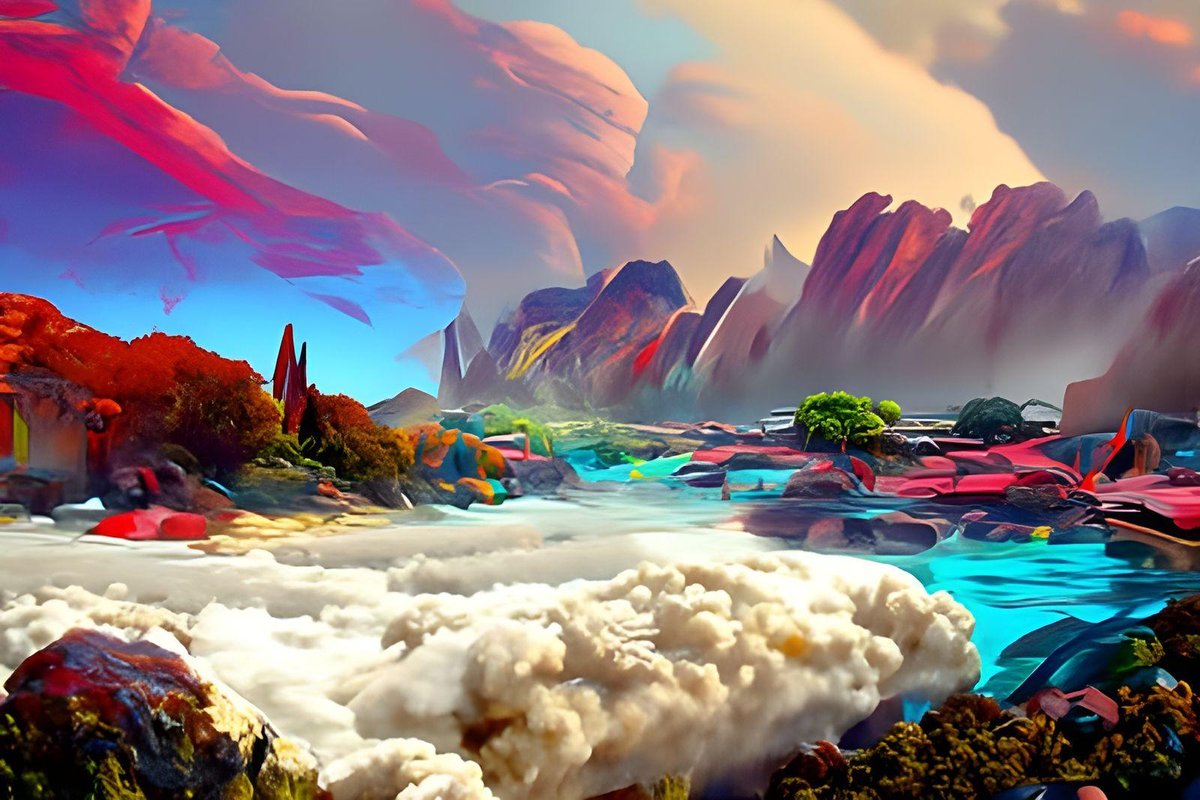
In a world awash with screens, from the phone in your pocket to the monitor on your desk and the smart display in your living room, personalization is no longer a luxury—it's an expectation. But creating truly unique, eye-catching wallpapers that perfectly capture your mood, brand, or aesthetic can feel like a daunting task, often requiring design skills or endless searching through generic stock photos. This is where AI-Powered Wallpaper Generation steps in, democratizing design and putting the power of a professional artist at your fingertips. Imagine transforming a fleeting thought into a visual masterpiece in seconds, tailor-made for any device or decor. Welcome to the future of digital and physical aesthetics.
At a Glance: Your AI Wallpaper Cheat Sheet
- What it is: AI-powered tools that convert text descriptions (prompts) into unique, custom images suitable for wallpapers and backgrounds.
- How it works: Utilizes advanced text-to-image algorithms, learning from vast datasets to interpret your words and generate corresponding visuals.
- Why you'll love it: Unlocks limitless creativity, offers instant personalization, eliminates the need for design skills, and provides perfectly fitted images for any device.
- Key features: Diverse style options (from photorealistic to anime), aspect ratio control, often includes powerful editing tools for refinement.
- Who it's for: Everyone—from individuals wanting a unique phone background to businesses needing branded visuals and educators creating virtual classrooms.
- Getting started: Simply type what you envision, choose a style, set dimensions, and let the AI do the heavy lifting.
Beyond Stock Photos: What is AI-Powered Wallpaper Generation?
At its core, AI-powered wallpaper generation is a remarkable application of artificial intelligence, specifically in the realm of generative art. These sophisticated tools use algorithms, trained on massive datasets of images and their corresponding text descriptions, to understand the relationship between words and visual concepts. When you provide a "prompt"—a detailed text description of what you want—the AI acts as an incredibly fast, infinitely imaginative artist. It takes your words, processes them through its learned understanding, and then "paints" an entirely new, original image from scratch, perfectly aligned with your request.
Think of it as having a digital muse that never tires and is always ready to bring your wildest visual ideas to life. From serene landscapes and futuristic cityscapes to abstract art and whimsical character designs, the only limit is your imagination. And the best part? These generated images are not just pretty pictures; they're optimized to fit various screen dimensions, ensuring your custom wallpaper looks crisp and perfect on any device, without awkward cropping or stretching.
Why Your Screens (and Spaces) Deserve a Custom Touch
Why settle for the default or a tired old photo when you can have something uniquely yours? AI-powered wallpaper generation isn't just a novelty; it's a practical, powerful tool for personal expression and professional branding.
The Power of Personalization
For individuals, the appeal is clear: your devices reflect you. A custom wallpaper isn't just a background; it's a daily dose of inspiration, a reminder of a dream, or a simple aesthetic pleasure. Whether you want a specific mood for your phone's lock screen, a calming vista for your desktop, or a vibrant pattern for your smart home display, AI lets you Generate your perfect wallpaper without needing an art degree. It empowers you to:
- Express your individuality: Showcase your unique taste and personality.
- Set the mood: Create wallpapers that inspire, relax, energize, or focus you.
- Commemorate special moments: Imagine an abstract representation of your favorite memory or an artistic interpretation of a loved one's name.
Boosting Productivity and Professionalism
The benefits extend far beyond personal use. For professionals and businesses, AI-generated wallpapers can be a subtle yet effective tool:
- Remote Workers: Create custom virtual backgrounds for video calls that are both professional and uniquely branded. No more messy home offices visible to colleagues or clients!
- Educators: Design engaging, themed backgrounds for virtual classrooms, making online learning more immersive and fun for students.
- Small Business Owners: Generate unique, branded visuals for social media, presentations, or even internal communications.
- Content Creators & Influencers: Develop distinct visual identities that stand out in a crowded digital landscape, creating a consistent aesthetic for your content.
This technology isn't just changing how we decorate our screens; it's transforming how we interact with and perceive our digital environments, making them more personal, purposeful, and reflective of who we are or what we represent.
The Magic Behind the Pixels: How AI Generates Your Vision
Ever wonder how a computer understands "a cat wearing a spacesuit, highly detailed, cyberpunk style, neon lighting"? The magic lies in sophisticated machine learning models, primarily Generative Adversarial Networks (GANs) and Transformer models (like those used in large language models), trained on colossal datasets.
Here's a simplified breakdown of the process:
- Vast Training Data: AI models are fed millions, sometimes billions, of images paired with detailed text descriptions. Through this process, the AI learns to associate specific words and phrases with visual attributes, styles, and objects. It understands that "cat" refers to a feline, "spacesuit" to certain attire, and "cyberpunk" to a particular aesthetic with specific colors and lighting.
- Prompt Interpretation: When you enter a text prompt, the AI breaks it down. It identifies keywords, understands the relationships between them, and deciphers your desired style, mood, and compositional elements. The more descriptive you are, the better the AI can interpret your intent.
- Image Synthesis: Using its learned knowledge, the AI begins to "dream up" an image. It starts from random noise and iteratively refines it, adjusting pixels and patterns until the generated image aligns with its understanding of your prompt. This is a bit like a sculptor starting with a block of clay and gradually shaping it into a recognizable form.
- Refinement and Optimization: Modern AI generators often include steps to enhance image quality, adjust colors, and ensure the output is high-resolution and artifact-free. Some even allow for negative prompts—telling the AI what not to include—further refining the outcome.
This iterative process, fueled by immense computational power and intelligent algorithms, allows the AI to create truly novel images that have never existed before, making each wallpaper uniquely yours.
Picking Your Power Tool: A Look at Leading AI Wallpaper Generators
The market for AI-powered creative tools is booming, and wallpaper generators are a shining example. Let's explore some of the prominent players, drawing insights from industry leaders, to understand what makes them stand out.
Canva's Creative Canvas: More Than Just Generation
Canva, a powerhouse in accessible graphic design, has integrated robust AI wallpaper generation through its Magic Media™ and Dream Lab features. It's an excellent choice for those who need more than just an image—they need a complete creative suite.
- Core Generation: Magic Media™ shines with its Text to Image and Text to Graphics capabilities. Whether you need a photorealistic scene or a set of custom icons, it handles both. Dream Lab further enhances this by supporting photorealistic wallpapers, leveraging reference visuals, and allowing multiple image generations for more options.
- Style and Dimensions Galore: Canva offers a rich palette of style presets: think Watercolor, Neon, Retrowave, Cinematic, Pop Art, Filmic, and Color Pencil. Crucially, it provides a wide range of aspect ratios (1:1, 16:9, 9:16, etc.), ensuring your creations fit perfectly on any screen, preventing stretching or distortion. The Magic Switch feature even allows for quick resizing after generation.
- Extensive Editing Tools: This is where Canva truly shines. Beyond basic generation, you get a full image enhancer, an online photo editor for precise adjustments, and powerful AI-powered tools:
- Magic Edit: Add, replace, or edit objects and backgrounds using simple prompts.
- Magic Eraser: Effortlessly remove distractions from your image.
- Background Remover: Instantly isolate subjects.
- Magic Expand: Seamlessly extend images beyond their original borders.
- Plus, all standard photo editing tools (focus, lighting, coloring, effects, filters, text addition) are at your disposal.
- Content Library & Collaboration: Access to millions of free images, icons, graphics, media elements, audio, and sound effects further enriches your creations. It's web-based, autosaves, and allows for real-time collaboration—perfect for teams or design projects.
- Safety & Commercial Use: Canva employs automated reviews for inappropriate prompts, adhering to clear usage policies. While commercial use is generally permitted, they advise seeking legal counsel for specific commercial ventures, as exclusive rights aren't guaranteed.
Canva is ideal for design newbies, educators, remote workers, and anyone who wants to not only generate a wallpaper but also integrate it into a larger design project or fine-tune it with professional-grade tools.
Media.io's Instant Art Studio: Speed and Variety
Media.io offers a Free AI Wallpaper Generator that prioritizes speed, variety, and ease of use, making it an excellent option for quick, high-quality custom wallpapers.
- Fast & Free Generation: Media.io prides itself on generating personalized wallpapers in seconds, often without limitations on the number of generations (at the time of writing). You can generate up to four images per style and save them instantly.
- Diverse Styles & Models: The platform boasts an impressive array of styles: 3D, anime, comic, cyberpunk, abstract, nature-inspired, photography, ink style, sketch style, superrealism sci-fi, and realistic portraits. It even allows you to choose different algorithm models and set negative words to guide the AI more precisely.
- Perfect Fit Every Time: Like Canva, Media.io supports various aspect ratios (16:9, 9:16, 4:3, 3:4) to ensure a perfect fit for phones, PCs, or even printable home decor without cropping or stretching.
- High Quality (and Higher Coming): It delivers high-quality wallpapers, with a promise of 2K resolution coming soon, ensuring your creations look sharp and vibrant.
- Simplicity & Accessibility: Media.io is designed for maximum ease of use—no extensive design skills needed. It's web-based, meaning you can access it from virtually any device with an internet connection.
Media.io is perfect for artists, designers, social media influencers, home decor enthusiasts, small business owners (for quick branded visuals), and personal users who need a vast array of styles and quick, high-quality generation without the need for deep editing capabilities.
Making the Choice: Which Tool is Right for You?
The best tool depends on your specific needs:
- For comprehensive editing and collaborative projects: Canva is your go-to. Its integrated design suite allows you to do so much more than just generate.
- For quick, high-quality generation with vast style choices and minimal fuss: Media.io offers an excellent free experience.
- For commercial endeavors: Both allow commercial use under their terms, but Canva specifically recommends legal advice, a prudent suggestion for any AI-generated commercial asset.
Ultimately, both platforms exemplify the incredible potential of AI in personalizing our digital lives.
Crafting Your Digital Masterpiece: A Step-by-Step Guide
Regardless of the specific tool you choose, the general workflow for creating an AI-powered wallpaper is remarkably similar. Here’s how you can turn your ideas into stunning visuals:
Step 1: Define Your Vision (The Power of the Prompt)
This is the most crucial step. The AI is only as good as the instructions you give it. Think about:
- Subject: What is the main focus? (e.g., "a majestic dragon," "a tranquil forest," "an abstract geometric pattern").
- Style: How do you want it to look? (e.g., "oil painting," "digital art," "anime," "photorealistic," "cyberpunk," "watercolor").
- Details & Mood: Add descriptive adjectives. (e.g., "stormy skies," "golden hour lighting," "serene atmosphere," "vibrant colors," "minimalist," "futuristic").
- Composition (optional but helpful): "Close-up," "wide shot," "from above," "symmetrical."
Example Prompt: "A serene forest at dawn, dappled sunlight, soft pastel colors, ethereal mist, digital art style, wide shot."
Step 2: Choose Your Aesthetic (Styles & Models)
Most generators offer a selection of pre-defined styles or algorithm models. Select one that aligns with your prompt. If you're using a tool like Media.io, you might select "Nature-inspired" or "Ink style." In Canva, you'd choose from presets like "Cinematic" or "Pop Art." Experimentation is key here!
Step 3: Get the Perfect Fit (Aspect Ratios & Dimensions)
This step ensures your wallpaper fits your device without distortion.
- Phone: Typically 9:16 (portrait).
- Desktop/Laptop: Often 16:9 or 16:10 (landscape).
- Tablet: Could be 4:3 or a custom ratio.
Select the aspect ratio that matches your target screen. Both Canva and Media.io provide clear options for this.
Step 4: Generate and Refine (Editing Tools)
Once your prompt, style, and aspect ratio are set, click "Generate image" (or similar).
- Initial Results: The AI will produce a few options. Review them to see how well they match your vision.
- Iteration: If the results aren't quite right, adjust your prompt. Add more detail, change a keyword, or try a different style. This iterative process is a core part of working with AI.
- Post-Generation Editing (Especially with Canva): If you're using a tool with advanced editing features like Canva, this is where you can truly fine-tune your creation:
- Use Magic Edit to change an object.
- Magic Eraser to remove a stray detail.
- Adjust lighting, add filters, or even layer text.
- Magic Expand can extend the background if you need more canvas.
Step 5: Download and Display
Once you're satisfied, download your AI-generated masterpiece. Most tools allow you to save in common image formats like JPG or PNG. From there, it's just a matter of setting it as your device's wallpaper or background. You can also share it directly to social media platforms or integrate it into other projects. With platforms like AI-powered wallpaper tools, getting your perfect background is simpler than ever.
Prompting Like a Pro: Tips for Stunning AI Wallpaper Results
The art of prompting is half the battle when it comes to AI generation. Here's how to craft prompts that yield truly stunning results:
- Be Specific, Not Vague: Instead of "a city," try "a futuristic cyberpunk city skyline at night, glowing neon signs, rain-slicked streets, flying vehicles."
- Use Keywords for Styles: Explicitly state the art style you want. "Digital painting," "pixel art," "hyperrealistic photo," "watercolor sketch," "synthwave," "steampunk."
- Describe Mood and Lighting: "Ethereal glow," "dramatic chiaroscuro," "soft ambient light," "gloomy overcast," "sunny and vibrant." This adds emotional depth.
- Specify Colors: "Monochromatic blue," "warm autumnal palette," "vibrant rainbow spectrum," "muted earth tones."
- Think About Composition: "Close-up of an eye," "wide shot of a mountain range," "centered subject," "rule of thirds composition."
- Add Quality Enhancers: Terms like "highly detailed," "4K," "photorealistic," "intricate," "masterpiece," "award-winning" can subtly guide the AI towards higher quality outputs.
- Utilize Negative Prompts: Some tools (like Media.io) allow you to specify what not to include. For example,
(ugly, deformed, blurry, low-resolution, extra limbs)can help clean up undesired artifacts. - Experiment and Iterate: Don't be afraid to try slightly different wording or completely new concepts. A small tweak in a prompt can lead to a dramatically different and often better result. It's an exploratory process.
Beyond the Basics: Advanced Customization Techniques
While a single prompt can produce incredible results, the real power of AI wallpaper generation often comes from iteration and leveraging post-generation tools.
- Iterative Prompting: If your first attempt isn't perfect, refine your prompt rather than starting from scratch. Add details, remove elements, or change the style keyword. For instance, if "ocean waves, sunset, realistic" gives you a nice image but you want more drama, try "crashing ocean waves, vibrant fiery sunset, dramatic lighting, highly realistic, cinematic."
- Leveraging AI Editing Tools (e.g., Canva's Magic Features):
- Magic Edit: Suppose your AI-generated wallpaper features a beautiful forest, but you want a small, glowing mushroom in a specific spot. Use Magic Edit, brush over the area, and prompt "add a glowing bioluminescent mushroom." The AI will intelligently integrate it.
- Magic Eraser: Did a strange artifact or an unwanted element appear in your otherwise perfect creation? Simply brush over it with the Magic Eraser to seamlessly remove it.
- Magic Expand: If your generated image is stunning but slightly too zoomed in for your desktop, Magic Expand can intelligently extend the background, creating a larger canvas without distorting the original composition.
- Background Remover (for specific elements): If you generated an AI image of an object, you could use a background remover to isolate it and then paste it onto another AI-generated background for a unique collage.
These advanced tools transform AI generation from a one-off event into a dynamic, interactive creative process, giving you granular control over the final output. They ensure that even if the AI doesn't hit your vision perfectly on the first try, you have the means to guide it to perfection.
Navigating the Nuances: Commercial Use, Ownership, and Ethics
As with any emerging technology, especially one dealing with creative output, questions around commercial use, intellectual property, and ethical considerations are paramount.
Commercial Use and Ownership
- Platform-Specific Terms: Always, always check the specific terms and conditions of the AI generator you are using.
- Canva, for example, permits commercial use of AI-generated content under its terms but explicitly states that exclusive rights are not guaranteed and recommends seeking legal advice for significant commercial endeavors. This is a critical point: while you can use the image, someone else might generate a very similar image.
- Media.io also allows for the creation of images for various purposes, including commercial ones like branded visuals for small businesses.
- Originality vs. Exclusivity: AI generates "new" images based on its training data. While the output is technically unique, it's a synthesis of learned patterns. This means it might resemble existing styles or even specific artworks in subtle ways. This lack of guaranteed exclusivity is why legal advice is crucial for ventures where unique intellectual property is paramount.
- The Copyright Debate: The legal landscape around AI-generated content and copyright is still evolving. In many jurisdictions, human authorship is a prerequisite for copyright protection. This means that AI-generated images might not be eligible for traditional copyright in the same way human-created art is.
Ethical Considerations
- Bias in Training Data: AI models learn from the data they're fed. If the training data contains biases (e.g., disproportionately representing certain demographics or styles), the AI's output might inadvertently reflect those biases. Responsible developers are actively working to mitigate this.
- Deepfakes and Misinformation: While less common for simple wallpapers, the underlying generative AI technology can be misused for creating misleading content. Reputable platforms, like Canva, employ automated reviews to detect and prevent the generation of inappropriate or harmful content.
- Environmental Impact: Training and running large AI models consume significant computational resources and energy. As the technology becomes more widespread, the environmental footprint is a growing concern for developers and users alike.
For personal use, these concerns are minimal. But for commercial applications, understanding these nuances is essential for responsible and compliant creation. When you want to create unique digital art, it's important to consider the tools and their policies.
Common Questions About AI-Generated Wallpapers
You've got questions, we've got answers. Here are some of the most frequently asked queries about AI-powered wallpaper generation:
Q: Is AI wallpaper generation really free?
A: Many platforms, like Media.io, offer free tiers with generous limits. Others, like Canva, offer a free tier with limited AI credits, and a subscription unlocks more generations and advanced features. It often varies by provider.
Q: Can I edit the generated images?
A: Absolutely! This is one of the biggest advantages. Tools like Canva offer extensive editing suites (filters, effects, Magic Edit, Magic Eraser, etc.) to refine your AI-generated art to perfection. Even basic tools allow for some color correction or cropping.
Q: What about copyright for AI-generated images?
A: This is a complex and evolving legal area. Generally, in many jurisdictions, copyright requires human authorship. While you typically have the right to use images you generate, claiming exclusive copyright ownership is often difficult or impossible under current laws. Always check the terms of service of the specific generator you use and consult legal counsel for commercial projects.
Q: How long does it take to generate a wallpaper?
A: Typically, only a few seconds! The AI processes your prompt and generates options almost instantly, making it incredibly fast compared to traditional design methods.
Q: What devices can I use these wallpapers on?
A: Any device with a screen! Smartphones, tablets, laptops, desktop computers, smart TVs, digital photo frames, and even smartwatches. By selecting the correct aspect ratio during generation, you ensure a perfect fit for any display. Many users also print them for home decor.
Q: Do I need design skills to use an AI wallpaper generator?
A: Not at all! These tools are specifically designed to be user-friendly, requiring only your imagination and the ability to describe your vision in text. This democratizes design, allowing anyone to make stunning custom wallpapers.
Q: Can I use AI-generated wallpapers for commercial purposes, like selling them or using them for my brand?
A: Generally, yes, but with important caveats. Many platforms permit commercial use under their terms. However, as discussed earlier, achieving exclusive copyright is often not guaranteed, and you should always review the specific platform's licensing terms and consider seeking legal advice for critical commercial applications.
Q: What if the AI generates something inappropriate or unexpected?
A: Reputable platforms have safeguards in place (like automated prompt reviews) to prevent the generation of harmful or explicit content. However, AI can sometimes misinterpret prompts, leading to unexpected or undesirable results. In such cases, simply refine your prompt or generate again.
Your Personal Canvas Awaits: Embracing the Future of Design
The rise of AI-powered wallpaper generation marks a fascinating evolution in how we interact with technology and express ourselves creatively. No longer confined by a limited library of stock images or the need for advanced design software, you now possess the capability to conjure virtually any visual you can imagine, tailored precisely to your needs and preferences.
From the quiet contemplation of a bespoke desktop background that inspires your daily work, to a vibrant phone wallpaper that reflects your latest passion, or even unique branded visuals for your burgeoning business, the applications are as limitless as your creativity. These tools don't just generate images; they unlock possibilities, transforming screens from mere displays into deeply personal canvases. So, go ahead. Dream up your ideal scene, describe it to the AI, and watch as your vision effortlessly comes to life. Your next favorite wallpaper is just a prompt away. Don't wait, generate your perfect wallpaper today and personalize your digital world.